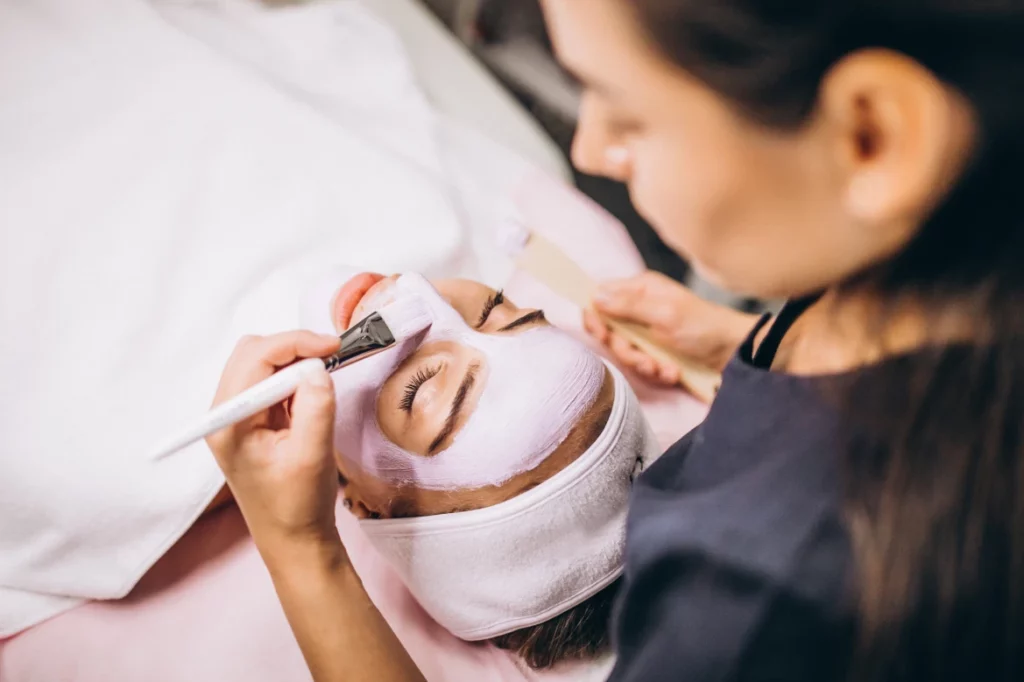
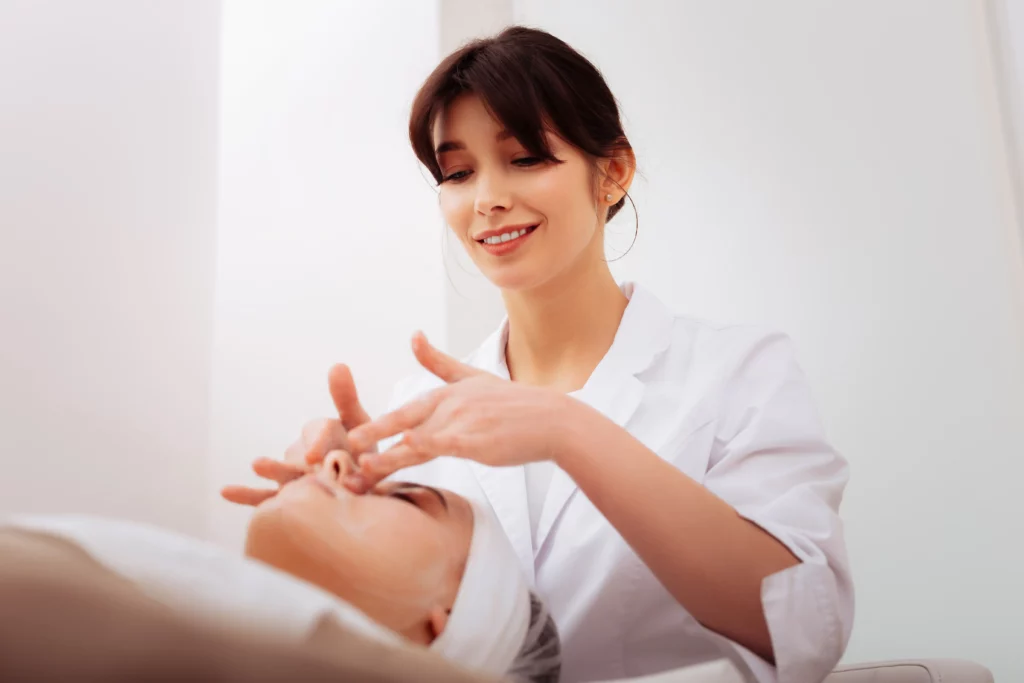
If you’re passionate about 10-step routines and glowy complexions, becoming an esthetician ( a licensed skincare professional) may be an ideal career fit. Learn how to start offering esthetics services, from meeting state requirements to booking your first clients!
Quick Guide: How Do You Become an Esthetician?
- Meet basic eligibility requirements
- Complete state-approved esthetician training
- Pass your licensing exam
- Apply for state licensure
- Start working as an esthetician
Bonus step: Protect your new skincare career with esthetician insurance!
What Is an Esthetician?
An esthetician is a licensed professional who offers cosmetic skincare treatments. They focus on how skin looks (versus medical skin enhancement) and help address client concerns, such as acne or signs of aging.
Some services they provide include:
- Facials
- Hair removal
- Chemical peels
- Microdermabrasion
- Lash and brow enhancement
- Makeup application
- Body treatments
- Spray tanning
In general, estheticians offer a narrower scope of skincare services than aestheticians, dermatologists, and cosmetologists. Here’s how they differ.
Esthetician vs Aesthetician vs Cosmetologist vs Dermatologist: What’s the Difference?
Swipe →
| Role | Primary Focus and Scope of Work | Education and Licensing |
|---|---|---|
|
Esthetician |
Offers non-medical skincare services such as facials, waxing, and exfoliation |
State-licensed; completion of an approved esthetics program and passing a licensing exam |
|
Aesthetician |
Often used interchangeably with esthetician, but commonly refers to those working alongside medical professionals (varies by state) |
Same licensing as estheticians; may require additional training for medical environments |
|
Dermatologist |
Diagnoses medical skin conditions and performs medical and cosmetic procedures |
Medical doctor; medical school, residency, and board certification |
|
Cosmetologist |
Performs a broad range of beauty services, including hair, nails, makeup, and basic skincare |
State-licensed cosmetology school covering hair, nails, and skincare fundamentals |
Learn more: What Does an Esthetician Do?
How Do You Become an Esthetician?
Here’s how to become an esthetician in five steps. Like your evening routine, each stage should be completed in order, leading up to the final result: your licensed esthetics career!
1. Meet Basic Eligibility Requirements
The first step is to check your state board’s requirements for esthetician licensure. Search “[your state] board of cosmetology or esthetics” to find the official website and rules. Many states require:
- A minimum age (ranging from 16 to 18 years old)
- A high school diploma or GED
- A specific number of education hours
- Passing scores on the state exam
- License application
✨ Pro Tip: Find your state’s official cosmetology board website, license guidelines, and coverage requirements with our helpful directory: Beauty Insurance by State.
2. Complete State-Approved Esthetician Training
Learn the science of skincare — and how to apply this knowledge to clients’ complexions — by completing the required esthetician education hours. Your state licensing board dictates how much training you need to practice esthetics safely.
Required esthetician training hours range from 220 to 1,000, depending on the state; many require around 600 hours.
Esthetician school covers topics such as:
- Skin physiology
- Product chemistry and ingredients
- Sanitation standards
- Facial treatments
- Hair removal
- Makeup application
- Client consultation
Quick Facts about Esthetician Training
- Some states offer an apprenticeship pathway, which allows you to learn hands-on, but often takes longer to complete than standard schooling
- Your esthetician program must be state-approved for the hours to count toward licensure
- Some state boards combine the cosmetology and esthetics licenses into a single license
- For more flexibility, look into hybrid versus in-person esthetician programs
Advice From an Esthetician
“Esthetics school is essentially prep for the state board. Find a school that has many clinic hours to prepare you to get comfortable touching people and truly getting a feel for things. Ask if you’re able to meet the instructors or current students before you commit to your school.” — Nichelle Temple, Inderma Studio
3. Pass Your Licensing Exam
After you complete your education, apply for your licensing exam. This is a two-part exam that includes written theory and a practical portion to demonstrate your technical skills.
Many states use the National Interstate Council of State Boards of Cosmetology (NIC) exam as their standard test. Typically, once you pass your exam, your scores are sent directly to the state board for verification.
Minimum passing scores depend on your state, but a score of at least 70% is generally required. The exams cover topics from your esthetician education, including sanitation, skin anatomy, and service techniques.
4. Apply for State Licensure
Next, apply for your official state license! Here’s an overview of what the process looks like:
- Fill out a first-time license application
- Have your school transcripts sent directly to the board
- Ensure the board received your passing exam scores
- Pay the application and license fee
After you receive your license, you are legally allowed to offer esthetics services. You will need to renew your license (usually every two years) by completing continuing education (CE) hours.
5. Start Working
With your esthetician license in hand, it’s finally time to start your career. Many new estheticians opt to work at an established spa as an employee to build their client base before going solo.
Whether you choose the independent or W-2 employee path, commit to offering excellent services and continuously deepening your skincare expertise. Your long-term success as an esthetician hinges on the foundation you lay now!
How Much Do Estheticians Make?
On average, estheticians make about $41.5K per year. Your earning potential depends on multiple factors, including:
- Where you practice
- Demand for your services
- Your experience and client base
- Specialized, high-demand services you offer
Though entry-level positions may start with a lower salary, you can increase your income by offering more advanced services or renting a booth (keeping a larger share of your profits).
Advice From an Esthetician
“Licensing is the beginning: This career rewards those who keep growing, not just those who finish school. Say yes to learning. Take extra classes, assist experienced estheticians, and absorb as much as you can.” — Nikki Bruce, Seaside Skin Care
What Are Some Common Esthetician Career Paths?
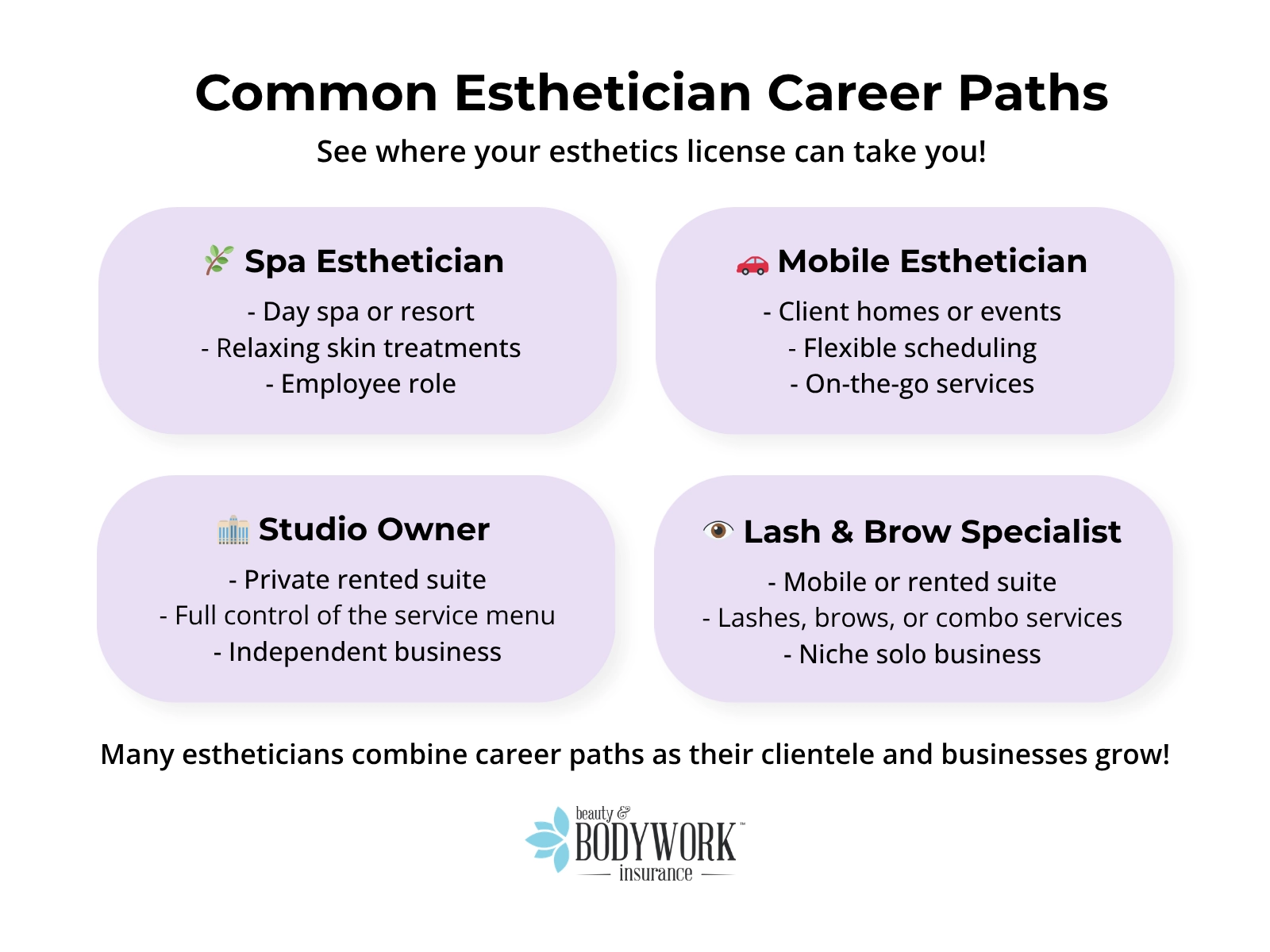
One of the biggest advantages of becoming an esthetician is career flexibility! Licensed estheticians can work in traditional spa settings, boutique studios, or through mobile services, in clients’ homes or events.
Here are some common esthetician career paths.
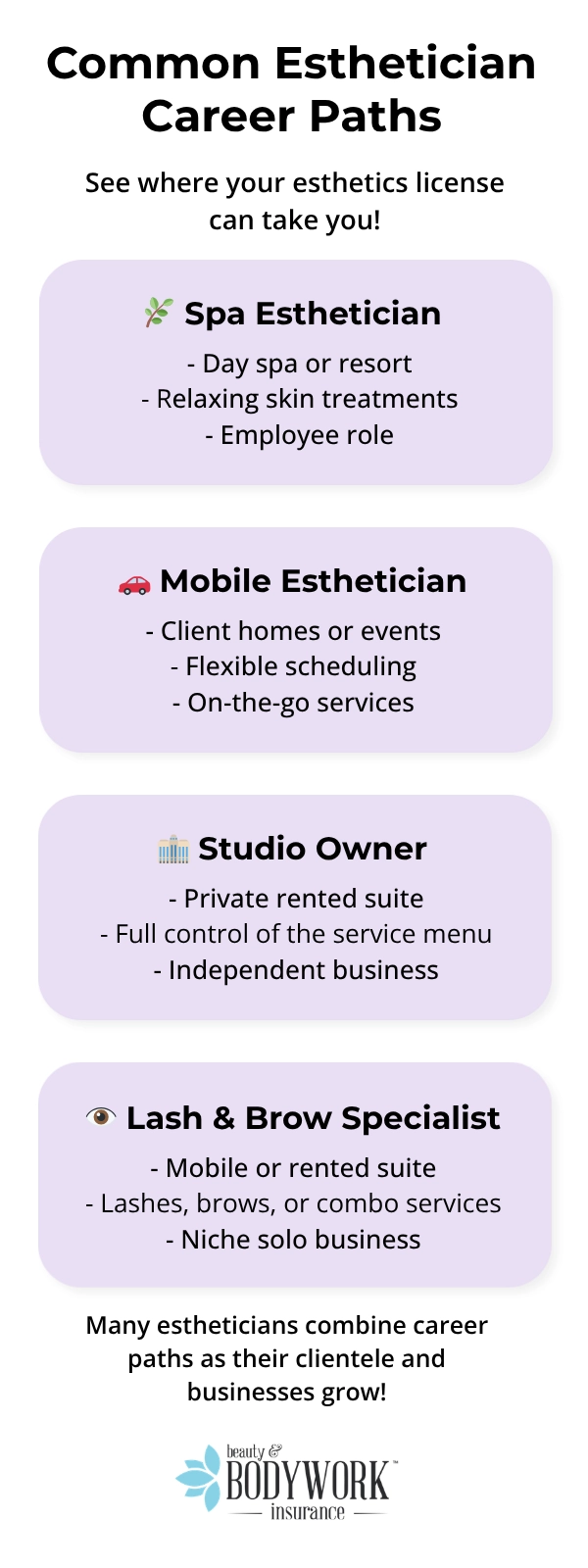
Do Estheticians Need Insurance Before Working?
Yes, estheticians need insurance coverage before working! Whether you work as a W-2 employee or an independent contractor, esthetician insurance is an essential safety net that protects your practice from costly client claims, like slip-and-fall injuries in your studio or allergic reactions.
Even as a new grad, insurance safeguards your esti business, helps you meet contract requirements, and promotes trust with clients.
Beauty & Bodywork Insurance (BBI) offers top-rated esthetician coverage from $9.99/month, providing peace of mind to focus on what you love — bringing out the best in clients’ skin.
Learn more about how esthetician insurance supports your practice as you grow your client base.
FAQs About How to Become an Esthetician
Do You Need a License to Be an Esthetician?
Yes, you need a state-issued license to perform esthetics! Without one, you risk facing fines, legal action, or being banned from licensure in the future.
How Long Does It Take to Become an Esthetician?
The number of required training hours for esthetics licensure varies by state, but in many states, it takes about 600 hours to complete mandated training. This translates to about six months to a year, depending on whether you study part-time or full-time.
Learn more with our guide: How Long Does It Take to Become an Esthetician?
How Much Does Esthetician School Cost?
The cost of esthetician school varies wildly, from $5,000 to $20,000 per program. Consider earning your education at a community college or state tech school for more affordable options.
Can You Become an Esthetician Online?
Hybrid (combined online and in-person) esthetician programs are available; however, you cannot become a licensed esthetician fully online. Esthetics requires practical, hands-on education that you must complete under an instructor’s supervision.
What’s the Difference Between an Esthetician and a Cosmetologist?
An esthetician specializes in skincare, while a cosmetologist is licensed to perform a broader range of cosmetic services, including hair, skin, and nail services. A cosmetologist’s scope of practice may overlap with an esthetician’s, but it all depends on the state board’s rules.