An insurance carrier is the company that issues your policy, assumes the risk, and pays covered claims. A carrier creates, underwrites, and finances policies.
Why it Matters for Beauty and Bodywork Professionals
Who pays: The carrier is the one funding covered claims
Faster help: Understanding roles (carrier vs broker vs producer) gets you to the right place for claims, certificates of insurance (COI), or changes
Venue and landlord confidence: Studios, landlords, and event organizers may look for a recognized, financially strong carrier on your COI
What Does an Insurance Carrier Do?
Underwrites risk: Evaluates your business and sets terms, limits, and prices
Issues the policy: Provides the contract with conditions, exclusions, and endorsements
Handles claims: Assigns adjusters and pays claims based on the policy terms
Manages compliance: May require safety or documentation standards to keep coverage in force
Insurance Carrier vs. Broker vs. Agent: What’s the Difference?
An insurance carrier is the underwriter and financier. They make the policy rules and pay the claims.
Insurance agents sell, service, and customize coverage, but typically represent only one insurance carrier.
Insurance brokers are similar to agents, helping you shop, service, and customize coverage, but typically represent you directly instead of a carrier.
An insurance producer is a more general term that applies to agents and brokers.
Swipe →
Role
What They Do
Contact Them For
Carrier/Insurer (Insurance Carrier)
Assumes risk, issues policies, pays covered claims
Claims
Agent
Typically represents or works for a specific carrier, and helps you buy and service coverage
Quotes, COIs, adding Additional Insureds, endorsements, other questions
Broker
Typically represents a client or customer to find the best policy for their needs
Finding coverage, getting quotes, help with other insurance questions
Producer
Broad term used for both agents and brokers
Quotes, COIs, adding Additional Insureds, endorsements, and
help with other insurance questions
Example:
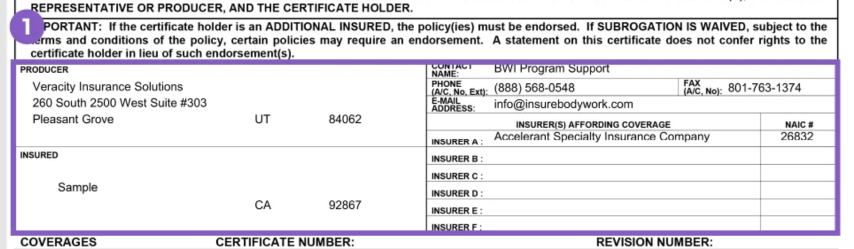
On a bodywork policy from BBI, there are boxes for the “producer,” the “insured,” and the “insurer affording coverage.”
The producer is BBI’s parent company, Veracity Insurance Solutions. The insured in this example is “Sample,” but would be your name on your policy. The insurer affording coverage is the same as the insurance carrier, in this case, Accelerant Specialty Insurance Company.
Why Carrier Strength Matters
Carrier strength, often displayed as letter ratings, matters because it represents the company’s reliability. A carrier’s rating, or strength, helps you assess:
Financial stability: An A-rated carrier (from independent rating agencies) signals a stronger ability to pay claims
Venue requirements: Some landlords or corporate programs prefer or require A-rated insurance carriers
Peace of mind: A highly-rated carrier is consistently reliable when paying claims
Where Do I See My Carrier’s Name on My Policy?
The insurance carrier’s name may appear in one or multiple places, including:
Declarations Page (Dec page): Shows the carrier’s legal name, the policy number, effective dates, and limits.
Certificate of Insurance (COI): Lists the carrier next to the coverage lines and limits shown to studios/events.
Endorsements and forms: The footer/header typically includes the carrier’s name or form code.
Billing and claim letters: Notices, claim assignments, and adjuster communications display the carrier or its claims administrator.