Massage therapists need clear communication skills to confidently work with stressed clients. When expectations are clear before, during, and after a session, you help clients unwind and reduce the risk of misunderstandings. Communicate effectively with the people who need your services the most with this guide, or jump ahead to the FREE toolkit.
What to Say Before You Begin (Save This for Later!)
- “Before we begin, is there anything stressful or heavy on your mind today?”
- “What areas feel most tense right now?”
- “Is there anywhere you’d prefer I avoid today?”
- “I’ll check in about pressure, but please tell me anytime if something needs adjusting.”
- “You’re welcome to talk or stay quiet, whatever helps you relax.”
April is National Stress Awareness Month, but stress happens year-round. When you combine strong communication skills for massage therapists with intentional marketing, you help more clients who need real relief and grow a sustainable practice.
Why Communication Skills Matter in Massage Therapy
Alongside anatomical knowledge and technique, clear communication is one of the essential skills needed to be a massage therapist. Clients may feel vulnerable on a massage table or even before they decide to book. But if you can properly address their concerns, they’re more likely to fully benefit from your services.
Communication skills help you:
- Build trust
- Establish informed consent
- Stay within your scope of practice
- Protect your license and reputation
This core skill also strengthens your brand. When clients feel safe and heard, they return to manage their stress with you, session after session.
Pro Tip
Strong communication helps grow your practice — but with growth comes more risk! Protect yourself while you build trust with massage insurance. Learn more: Massage Therapy Insurance.
The Client Calm Toolkit
Before They Book: Market to Stressed Clients Ethically
Clients book massages for various reasons, such as alleviating physical pain or improving overall wellness. Many turn to bodywork to reduce stress, as a well-deserved moment of self-care. When it comes to marketing to stressed clients, the key is to identify real symptoms and a solution.
Instead of “Book a massage today!”
Try “Feeling overwhelmed, tense, or mentally drained? Let’s help your body reset.”
This simple shift in messaging helps clients clearly pinpoint how stress affects them physically, so they can find relief from your services.
Stress-Focused Messaging Tips
- Speak to physical symptoms, not diagnoses
- Normalize stress (“Feeling stressed or burned out is more common than you might think”)
- Emphasize the mental and physical benefits of your services
- Always avoid medical claims
Your marketing efforts should reflect the calm, safe experience clients can expect from your practice.
Pro Tip
Stress in today’s workplaces is common, and certain industries have higher physical strain and mental pressure than others! Learn more: The Top U.S. Jobs That Could Use a Massage.
Before the Session: Set Expectations Early
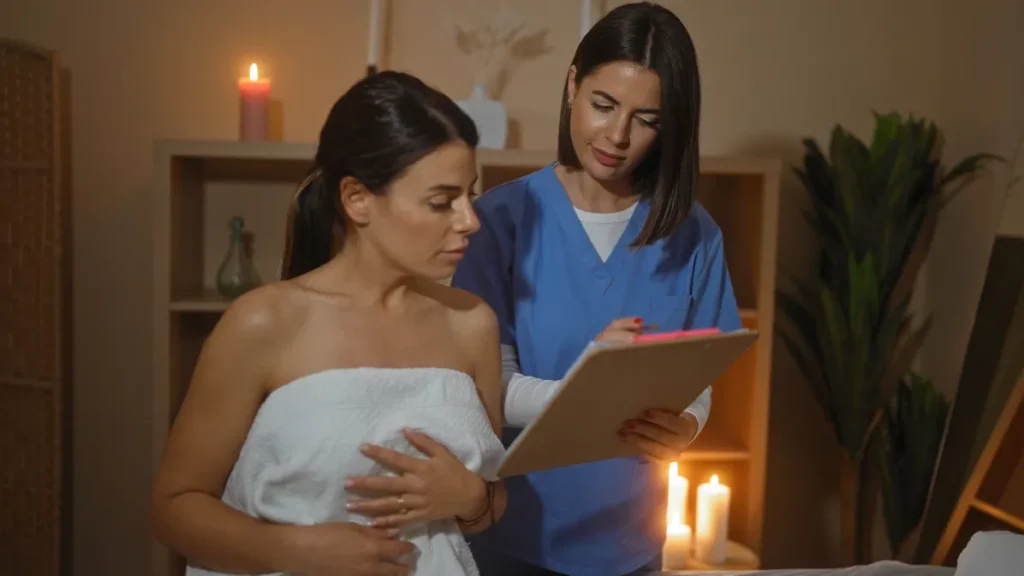
When clients walk through your doors, your in-person communication begins. The goal is to provide clarity on what to expect during the session and establish informed consent.
Your clients must understand they can speak up at any time during the session.
Communication Checkpoints to Complete
- Intake form
- Session goals
- Areas to avoid
- How draping works
- Pressure expectations
- Communication guidelines
What to Say
- “Today, we’ll focus on your upper back, unless you’d like to adjust to another area.”
- “If pressure ever feels uncomfortable or painful, please tell me.”
- “I’ll check in with specific questions during the session.”
- “You’re always in control of the session.”
Reminder: Informed consent is when a client agrees to your massage services, knowing the possible risks, benefits, and purpose. Informed consent in massage therapy is ongoing, not just a one-time OK beforehand.
Pro Tip
Poor communication from clients is just one reality of bodywork careers. Read more about 13 Real Problems Massage Therapists Face (+ How to Handle Them Like a Pro).
During the Session: Maintain Safety
Throughout massage sessions, keep communication open to ensure clients feel supported and calm. It’s common for clients to request no conversation so they can relax more deeply. Either way, respect their preferences and encourage them to ask questions or note concerns.
Much of in-session communication involves non-verbal cues and quiet narration. Stressed clients often benefit from more focused, immersive sessions that allow them to “get away” from their worries.
What to Do
- Quietly narrate transitions (“I’m moving to your shoulders now.”)
- Ask specific questions (“Is this pressure comfortable for you?”)
- Use confident, neutral language when speaking
- Don’t start a conversation, but engage if they initiate
- Observe non-verbal cues, such as breathing, tension, and body shifts
- Stay within your scope of practice — don’t offer therapy or medical diagnoses
Pro Tip
Clear communication supports your clients’ wellness and helps protect your practice. Explore more: Massage Therapist Risk Management Tips.
After the Session: Close With Confidence
Once a session is complete, it’s essential to provide clear aftercare information so clients don’t mistake normal soreness for injury. Preventing simple misunderstandings like these helps build trust and reduce the risk of liability claims.
Always close a session by clearly and gently informing the client that the session is over. Once they’re dressed, go over any areas they may want to address with additional work.
What to Say
- “We’re at the end of your scheduled time.”
- “Please take your time getting up to avoid dizziness.”
- “You may feel a little sore tomorrow, which is normal after deeper work.”
- “I’d recommend we work on [specific area] again in about [timeframe].”
- “Let’s book your next appointment to continue managing your stress levels.”
Boundaries That Protect Your Time and Energy
You give a lot to clients, so don’t forget to protect your peace and practice. Setting clear boundaries makes clients feel safer, too.
Keep everyone calm and clear with:
- A written cancellation policy
- A late arrival policy
- A service menu, with exact session lengths
- Professional draping standards
- Clear scope of practice
- Emotional boundaries (as in, no mental or emotional therapy)
- Zero tolerance for inappropriate client behavior
Pro Tip
Taking care of yourself allows you to show up with more clarity for clients. Discover Self-Care That Works for Massage Therapists.
Scenario Table: What to Say in Difficult Moments
| Situation | What to Say | What to Do Next |
|---|---|---|
|
Client asks for unsafe deep pressure
|
“I want to work effectively without causing injury. Let’s stay within a safe range.”
|
Modify your technique and document the session
|
|
Client becomes very emotional
|
“Thank you for sharing. Let’s focus on helping your body relax today.”
|
Keep the session body-focused
|
|
Client requests an inappropriate area
|
“This request is inappropriate, and I’m ending the session now.”
|
Firmly ask the client to leave; document and report the incident
|
|
Client talks throughout the session
|
“I’ll let you relax now so you can get the full benefit.”
|
Try using ambient, relaxing music to set a quieter tone
|
|
Client pushes past the session time
|
“We’re at the end of your scheduled session.”
|
Calmly end the session and offer to book their next appointment
|
Protect Your Practice With Liability Insurance
Even with clear communication, accidents and misunderstandings can happen. Massage therapy insurance is a safety net designed to protect your practice from claims such as pressure-related injuries, allergic reactions to essential oils, or client property damage.
It can also safeguard your business if you face false accusations of sexual misconduct through an optional add-on, sexual abuse and molestation (SAM) coverage (not available for male massage therapists).
When you’re helping protect your practice from common massage insurance claims, you can work confidently and focus on supporting stressed clients. Beauty & Bodywork Insurance (BBI) offers top-rated liability coverage from $9.99/month. Our policy is tailored for your industry and trusted by your peers — in fact, 68% of our LMT policyholders have been practicing for over a decade!
Explore Massage Therapy Insurance Costs.
Free Download: The Client Calm Toolkit
Download our free, printable version of scripts and templates. From marketing messaging to post-session texts, this toolkit is designed to make clear communication easy.
FAQs About Communication Skills for Massage Therapists
What Should I Say to a Stressed or Anxious Massage Client Before We Begin?
Start by acknowledging their stress and setting expectations clearly. You might say, “What areas feel most tense today?” Reassure them they’re in control of the session to help them feel calm and supported before you begin.
How Do I Set Boundaries Without Sounding Rude or Clinical?
Use calm, confident language that focuses on safety. Instead of apologizing, try phrases like, “For safety, we’ll stay within a comfortable pressure range,” or “That technique is outside of my scope, but here’s how I can support you.” Frame boundaries for their benefit — you’re committed to their well-being.
What Are the Best Intake Questions for Stress-Focused Sessions?
Ask questions that connect client stress to physical symptoms. For example, “Where do you tend to hold tension?” or “Have you been experiencing headaches, jaw tightness, or hip tension?” These questions help you tailor the session to their stress patterns.
Why Is Informed Consent in Massage Therapy Important?
Informed consent ensures clients understand and agree to the treatment plan before and during the session. It’s an essential aspect of safe, professional therapy that protects both you and the client by helping to reduce misunderstandings.